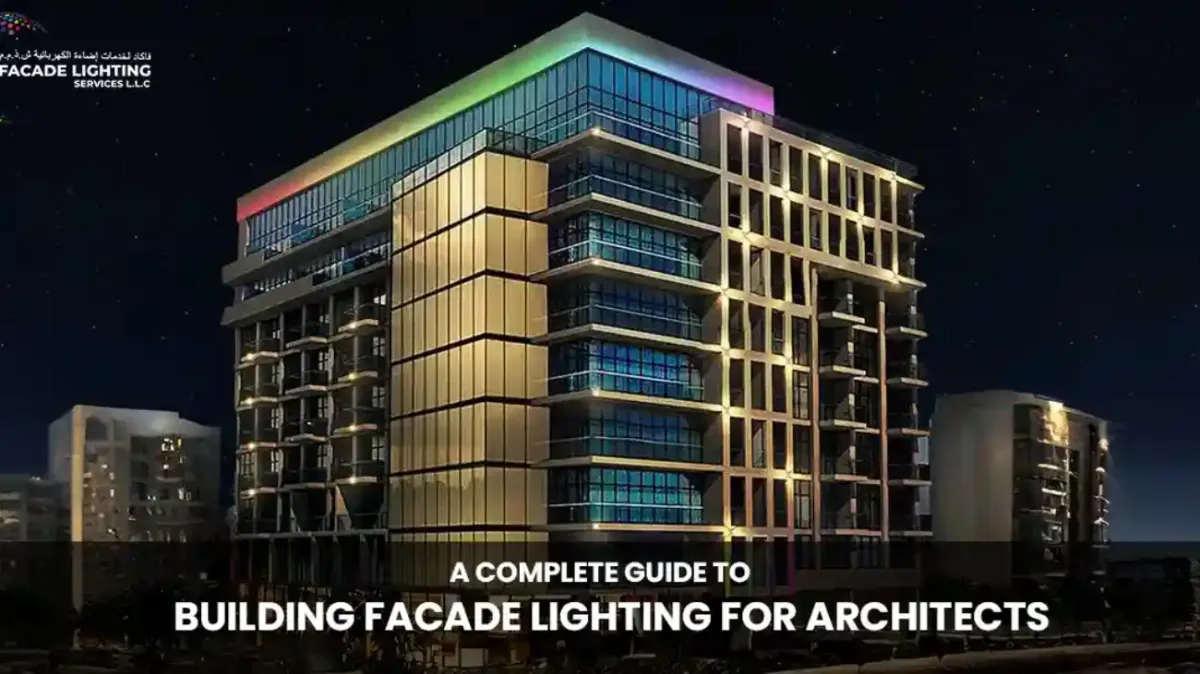
building facade lighting

A Complete Guide to Building Facade Lighting for Architects

Designing the exterior of a structure is no longer limited to form, material, and spatial expression. Today, lighting plays a defining role in shaping how architecture is perceived after sunset. As Indian and global cities continue to evolve into vibrant nightscapes, architects are expected to create facades that are not only functional but also visually striking. This is where building facade lighting becomes a powerful design tool. At Facade Lighting Services, we work closely with architects to help them transform elevations into illuminated statements that enhance brand identity, safety, and ambience.

A well-lit facade sets the tone for the architectural narrative. It highlights essential features, guides the viewer’s eye, and adds depth and dimension that may not be visible during the day. While the demand for aesthetically driven lighting grows, architects must balance creativity with engineering accuracy. Strategic facade illumination ensures that the building remains captivating without causing light pollution or excessive energy consumption.

Understanding the Purpose of Facade Lighting in Modern Architecture

Facade lighting serves far more than decorative purposes. For architects, it is a means of extending a building’s daytime personality into the night in a way that looks natural yet captivating. Proper exterior illumination reinforces the design language by drawing attention to the rhythmic arrangement of materials, textures, projections, and voids. It also significantly enhances security by improving visibility and shadow control, especially in commercial complexes, hotels, and public buildings.

An effectively illuminated façade influences how individuals experience urban space. Whether it is a cultural venue, corporate tower, shopping mall, or hospitality property, light becomes a medium of storytelling. By blending aesthetic goals with technical expertise, architects can ensure that light elevates the architectural essence instead of overpowering it.

building facade lightings

Different Types of Facade Lighting Used in Architectural Projects

Architects can choose from a wide range of types of facade lighting, each offering distinct visual outcomes. Grazing is one of the most popular techniques used to bring out material textures such as stone, wood, or perforated metal. Wall washing, on the other hand, creates a smooth, evenly illuminated surface that enhances the simplicity of flat facades. Uplighting highlights verticality, making structures appear taller and more imposing, while downlighting provides a subtle, grounded effect for serene architectural compositions.

There are also niche methods such as silhouette lighting, floodlighting, accent lighting, and contour lighting. Each technique must be selected based on the architectural elements that deserve emphasis. As lighting consultants, we help architects understand how to layer these methods cohesively so that the façade appears balanced from every viewing angle.

Choosing the Right Facade Lights for Architectural Projects

The effectiveness of a lighting concept depends heavily on the fixtures used. Modern facade lights come in various forms, from linear LEDs and projectors to recessed fittings and compact spotlights. Selecting the right fixture requires a clear understanding of its beam angle, lumen output, color temperature, ingress rating, and material durability. For example, coastal regions demand corrosion-resistant fixtures, while metropolitan areas with heavy dust require robust housings and easy-to-clean designs.

Lighting color also plays a crucial role. Warm white tones create a welcoming, luxurious feel, while neutral whites enhance modern minimalistic structures. RGB and RGBW options allow color-changing effects for dynamic or branding-oriented projects. The goal is always to complement rather than clutter the architecture, ensuring that the chosen fixtures integrate seamlessly with the facade design.

Advantages of Using Outdoor Facade Lights in Modern Structures

One of the biggest advantages of outdoor facade lights lies in their ability to create visual prominence even in dense urban settings. Buildings with well-planned illumination often become landmarks within their locality. Additionally, modern LED technology ensures energy efficiency, reducing long-term operational costs for property owners.

Outdoor lighting also influences human behavior. A well-lit environment feels safer and more inviting, especially in public spaces such as malls, transport hubs, business districts, and hospitality landscapes. For architects, this means greater freedom to define how people interact with the building after dusk. Whether highlighting entrances, framing architectural outlines, or illuminating pathways, outdoor façade lighting strengthens the overall atmosphere.

Growing Demand for Facade Lighting in Dubai and Other Architectural Hubs

The rapid increase in facade lighting in Dubai reflects how cities around the world use light to create iconic skylines. Dubai’s infrastructure showcases some of the most advanced lighting designs, ranging from hotels and towers to cultural buildings and waterfront developments. Architects working in global markets look toward Dubai as an example of how lighting innovation can transform urban identity.

Dynamic illumination, pixel-controlled LEDs, and smart lighting systems have become standard across major developments. Dubai’s success has inspired many architects in India, Saudi Arabia, Qatar, and Southeast Asia to explore similar design philosophies that combine beauty, technology, and efficiency.

Evolution of Outdoor Lighting in Dubai and Its Influence on Architects

Today, outdoor lighting in Dubai is considered a benchmark for luxury and modernity. The city’s emphasis on architectural lighting has encouraged architects to think beyond static illumination. Motion-based sequences, color-changing effects, and façade-integrated lighting systems enable structures to communicate during festivals, events, and celebrations.

Architects must understand these evolving trends, even if their projects are located outside the Middle East. Clients increasingly desire lighting features inspired by global design standards. By studying Dubai’s lighting strategies, architects can create facades that appeal to both local aesthetics and international sensibilities.

Principles of Exterior Facade Lighting Design

Designing exterior facade lighting requires a delicate balance of art and engineering. Light must enhance architectural qualities without overwhelming the structure. Architects often begin by identifying the façade’s focal features: vertical fins, glass surfaces, texture-rich walls, structural frames, or balconies. Each element requires a different lighting approach to maintain visual hierarchy.

Another principle is uniformity. Uneven illumination can distort the facade’s proportions, making it appear patchy or unrefined. Proper placement of fixtures ensures a consistent wash of light where required. Additionally, controlling glare is essential for occupant comfort and public safety. Using shields, louvers, and appropriate angles prevents direct visibility of harsh LED sources.

Architectural Facade Lighting as a Medium of Artistic Expression

For designers, architectural facade lighting offers the freedom to interpret the building in unique ways. Lighting can emphasize rhythm, add contrast, create silhouettes, or evoke emotion. Soft, diffused lighting can make a cultural building feel serene, while bold lighting with high contrast may suit a contemporary commercial project. Color variations offer yet another layer of artistic customization.

However, art must always meet function. Lighting must support wayfinding, safety, energy efficiency, and environmental regulations. At Facade Lighting Services, we collaborate with architects to create lighting solutions that resonate with their design vision while meeting all technical requirements.

Impact of Media Facade Lighting on Modern Urban Architecture

In recent years, media facade lighting has revolutionized how buildings communicate. These façades act as massive digital canvases capable of displaying patterns, animations, and even full video content. This technology is commonly used in stadiums, malls, convention centers, and large commercial towers.

Media façades offer limitless creative possibilities, but they require precision engineering, especially concerning load capacity, data management, and long-term maintenance. Architects must coordinate closely with lighting and control system experts to ensure that the façade remains visually sharp without compromising structural integrity.

Designing Outdoor Facade Lighting for Optimal Visual Impact

The success of outdoor facade lighting depends heavily on the location of fixtures and the control system used. Architects must consider visibility from various distances, viewing angles, and pedestrian pathways. High-rise structures, for example, need different illumination strategies compared to low-rise commercial buildings or villas.

Lighting intensity must be carefully calculated to avoid overpowering neighboring structures or causing glare on adjacent roads. Dimming controls, timers, and automation systems ensure that the façade transforms smoothly from day to night without wasting energy. When done correctly, outdoor façade lighting transforms buildings into landmarks that enrich the nighttime skyline.

How Facade Lighting Installation Works?

Proper facade lighting installation is crucial to ensuring the long-term performance of the lighting design. The installation process typically begins with a detailed site survey that maps out fixture positions, cable routes, power sources, and control panels. For complex projects, mockups are created to test beam angles, color output, and lighting effects.

Electricians, façade engineers, and lighting designers must work collaboratively to integrate fixtures without damaging architectural surfaces. Safety is a major priority, especially when working on high-rise buildings. Water-proofing, heat dissipation, grounding, and proper cable protection ensure that the lighting system remains reliable for years.

Why Building Facade Lighting Matters for Architects Today?

As the demand for visually impactful structures increases, architects must think beyond form and material. This is why building facade lighting has become an essential part of the design process. The goal is to create a façade that remains expressive, functional, and engaging long after the sun sets. Lighting gives architects the freedom to redefine space, emphasize geometry, and create an identity that is visible from afar.

With advancements in LED technology and smart controls, facade lighting is more efficient, durable, and cost-effective than ever. Whether designing for residential towers, commercial complexes, hotels, or government buildings, architects who master façade lighting gain a competitive edge in shaping modern urban environments.

facade lights

Guide to Choosing the Best Facade Lights for Commercial Projects

Creating a powerful first impression is essential in modern architecture, and lighting plays a crucial role in achieving that impact. Whether it’s a commercial tower, shopping mall, hotel, or corporate office, the right lighting transforms the way a structure is perceived at night. Today, property developers, architects, and lighting consultants increasingly rely on facade lights to highlight architectural beauty, enhance visibility, and create a memorable identity. As a trusted global lighting partner for architectural illumination, Facade Lighting Services works closely with businesses to deliver design-focused and energy-efficient lighting solutions tailored to each building’s character. Contact us!

Understanding the Purpose of Facade Lighting

Facade lighting is more than just decoration. It improves nighttime visibility, ensures safety, and strengthens brand presence. The exterior of a building becomes a visual signature that communicates prestige, culture, energy, and attention to detail. When designed well, lighting also helps guide visitors, enhances security, and reinforces a building’s function and status.

In modern infrastructure development, the demand for high-performance luminaires has grown exponentially. Municipal and industrial development authorities are investing heavily to illuminate streetscapes, public structures, retail zones, and entertainment districts. As a result, the market for commercial lighting continues to expand, and facade lighting remains an essential part of that growth.

facade light

A Growing Trend in Modern Architecture

Architectural evolution aims not only to create functional spaces but also to inspire through art and engineering. With rapid urban growth and technological advancements, designers now approach exterior illumination as a discipline that blends creativity and precision. Lighting consultants study angles, textures, height, façade materials, and viewing distance to achieve an outcome that remains visually appealing from multiple vantage points.

Brand-conscious commercial spaces increasingly adopt iconic night lighting strategies to differentiate themselves in crowded business districts. Businesses understand that people are drawn to places that look vibrant and engaging, and buildings with well-planned illumination become landmarks.

Key Design Principles in Building Facade Lighting

When applying building facade lighting, designers must consider architectural style and how light interacts with shapes and finishes. Glass facades require elegant wash lighting, while stone or metallic surfaces respond to grazing light that emphasizes patterns and shadows. Layering techniques play an important role — balancing vertical luminance, accent illumination, and ambient lighting to create depth and dimension.

Environmental responsibility also shapes design choices. Advanced LED optics, long-life fixtures, and smart controls reduce energy consumption and maintenance costs. The right lighting supports sustainability goals while delivering breathtaking visual results.

Types of Lighting Used in Facade Applications

There are multiple techniques involved in illuminating an exterior structure. Each one serves a unique purpose, from highlighting textures to brightening large surfaces. Understanding types of lighting used for facades ensures the final result matches both design intent and functional goals.

Lighting experts study facade geometry and identify focal points that deserve attention — edges, pillars, logos, podiums, terraces, and skyline features. Precision and careful planning enable designers to minimize glare and ensure visual comfort for occupants and pedestrians.

In addition, the placement of luminaires must respect architectural integrity. Fixtures should remain minimally intrusive during daytime while delivering superior illumination performance at night. Durability against harsh outdoor conditions is equally important.

The Evolution of Outdoor Facade Lights

Earlier, external illumination systems relied heavily on traditional bulbs and floodlights that lacked flexibility and energy efficiency. Today, outdoor facade lights feature advanced LEDs capable of producing multiple beam angles, variable brightness levels, and dynamic lighting effects. These luminaires withstand heat, humidity, rain, dust, and other environmental challenges.

In commercial projects, lighting quality determines audience experience. A hotel entrance illuminated with warm, soft lighting evokes invitation and luxury. A business tower with vertical accents conveys elegance and strength. Retail spaces with dramatic lighting generate curiosity and foot traffic. Each lighting decision influences how people connect with architecture.

Technology and Sustainability in Exterior Facade Lighting

Energy-efficient illumination has become a requirement for commercial buildings striving for certifications like LEED and green-building compliance. Smart lighting controls allow operators to program scenes, automate brightness changes, and monitor performance remotely. Sensors and IoT-based systems ensure illumination adjusts according to occupancy and ambient light conditions.

Manufacturers now develop optical control innovations that direct light precisely where needed, minimizing light pollution. With sustainability becoming a necessity rather than an option, modern exterior facade lighting prioritizes efficiency and environmental protection while delivering stunning visual effects.

Facade Lighting Installation: Planning for Longevity

Proper planning and execution during facade lighting installation determine system durability and effectiveness. The installation must adhere to safety regulations and structural limitations. A strong mounting framework prevents vibration and corrosion, especially in high-wind zones and coastal environments.

Cable routing requires careful planning to avoid damaging building materials and to maintain clean aesthetics. Waterproofing, surge protection, and thermal management ensure long-term reliability. A good lighting partner ensures that performance remains consistent over years of operation.

Maintenance strategy is also crucial. Access points for inspection, replacement, and cleaning should be incorporated during the design phase. Choosing high-quality fixtures reduces downtime and eliminates frequent servicing.

RGB Facade Lighting for Dynamic Visual Identity

Color illumination has grown increasingly popular in hospitality, entertainment, and government precincts. With RGB facade lighting, operators can control color schemes using DMX or DALI systems and customize effects for festivals, brand campaigns, and national events.

Dynamic lighting fosters emotional connection and enhances nighttime identity. Buildings come alive with movement and color transitions, transforming commercial districts into vibrant social destinations. Advanced technologies offer smooth color blending, flicker-free operation, and precise synchronization between lighting zones.

The customization possibilities are limitless — from subtle tones to striking animations that transform architecture into a digital visual canvas.

Media Facade Lighting and Interactive Architecture

One of the latest advancements in architectural illumination is media facade lighting, where LEDs are embedded into the building structure to create scalable communication surfaces. These facades serve as digital billboards capable of displaying patterns, videos, animations, and real-time content.

Media facades allow organizations to promote events, branding messages, or artistic expressions. Large commercial buildings, entertainment arenas, and corporate headquarters increasingly adopt this technology to stand out in highly competitive environments. These installations turn buildings into storytelling platforms, merging architecture, creativity, and cutting-edge technology.

Regional Growth and Design Influence

Commercial hubs across different regions continue to adopt advanced lighting technologies. In India, developers and architects are rapidly implementing facade lighting in India to transform skyline views and attract tourism. Shopping complexes, smart cities, and recreational venues contribute to a growing demand for architectural illumination.

Similarly, the Gulf region remains a leader in creative nighttime lighting, with facade lighting in Dubai setting international benchmarks. Glowing skyscrapers, hotels, bridges, and cultural structures position Dubai as a global capital for lighting innovation. Knowledge gained from these regions is now influencing lighting designs worldwide.

Choosing the Right Lighting Partner

Investing in façade illumination requires more than just buying fixtures. The success of a project depends on expertise in lighting design, product selection, installation, and after-sales support. Errors such as wrong beam angles, uneven distribution, and excessive brightness can disrupt the visual appeal and cause light pollution.

Facade Lighting Services specializes in delivering complete solutions — from concept development and fixture supply to installation and technical support. A reliable partner ensures that performance, aesthetics, and sustainability align perfectly with project goals.

Why Quality Matters in Facade Lighting?

Commercial buildings demand illumination that withstands outdoor conditions and remains visually consistent over long operational hours. Premium luminaires ensure stability in color temperature, brightness, and optical control. Robust construction materials, corrosion-resistant finishes, and certifications ensure safety and quality compliance.

High-performance lighting enhances brand reputation. Visitors and customers form impressions based on attention to detail. Lighting that fades, flickers, or shows uneven tones can damage building perception. Investing in quality lighting solutions protects both brand value and operational efficiency.

Future of Facade Illumination

The next generation of façade lighting combines automation, AI-driven systems, and environmentally conscious design. Technology will enable buildings to react to weather patterns, traffic movement, or public activity. Data-driven illumination strategies will optimize energy use while enhancing the city’s visual experience.

Architects, businesses, and governments will continue seeking ways to make structures stand out while minimizing environmental impact. The future of illumination blends technology and beauty — turning architecture into interactive art.

Conclusion: A Brighter Path Forward

The exterior of a commercial building represents its identity, purpose, and vision. With the right lighting, architecture transforms into a symbol of pride and inspiration. As businesses increasingly recognize the importance of designing visually compelling spaces, the demand for thoughtfully planned façade illumination continues to grow.

By partnering with experienced specialists like Facade Lighting Services, commercial developers gain access to professional expertise, innovative products, and reliable installation backed by years of industry experience. From elegant simplicity to dynamic media displays, facade lights hold the power to elevate spaces, energize communities, and redefine skylines across the world.